
Forthcoming in 2026: Conflict, Crime and Criminology (West Sussex, UK: John Wiley & Sons)
The Politics of the Police (5th ed.) (with Ben Bowling and Robert Reiner) Oxford : OUP 2019
In the most recent edition of Robert Reiner’s classic book, Ben Bowling and I contribute to the effort by helping extend the analysis of the politics of the police to include the plural and global institutional landscape on which the issues rest. For better and for worse, London is a pre-eminent global city and the politics of the police necessarily reflect this shift.
Global Policing (with Ben Bowling) London: Sage 2012
The book aims to synthesize a theoretical language for talking about global policing that links what we know of the empirical practices of transnational policing to broader theories concerning the global system. Mediating between the micro-level of everyday transnational policing practices and the macro-level of an abstract global system, is a relationship between local police subcultures and and subculture of transnational policing. The latter is made up of liaison officers and field intelligence officers whose work organizes police networks. While local police subcultures each have their own unique characteristics, they share a ‘family resemblance’ and it is meaningful to think in terms of a transnational subculture of policing. Theoretically speaking, global policing is where the transnational subculture of policing meets the subculture of transnational policing. As Rosa Luxemburg noted, the police are the real First International.
Transnational Crime and Policing; Selected Essays, Routledge Pioneers in Criminology, (London: Routledge, 2011)
This volume collects together a selection of previously published refereed journal articles in one package. Part one consists of early theoretical essays exploring the idea of transnational policing. Part two has essays based on empirical field studies of the transnational practices of police agents and agencies. Part three contains a series of essays exploring issues concerning political and legal accountability for transnational policing. In part four are essays which indicate likely future trajectories for empirical research in the field.
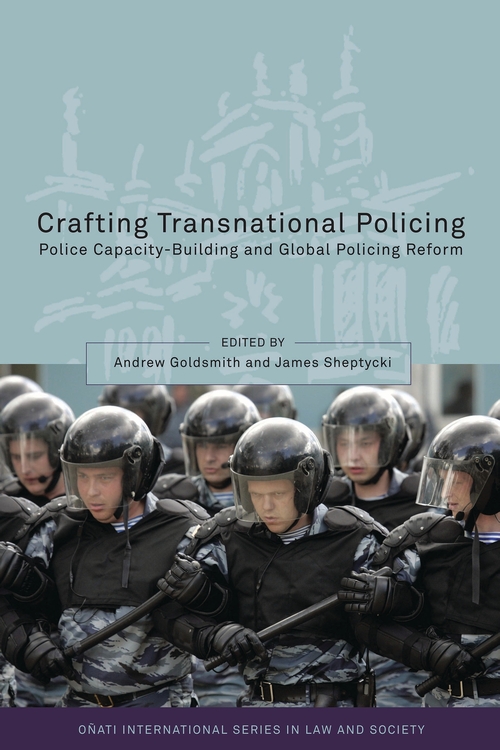
Crafting Transnational Policing; police capacity building and global policing reform (with Andrew Goldsmith), (Oxford: Hart 2007)
This volume brings together a stellar cast of people to explore how transnational policing practice is crafted. At issue is the relationship between police capacity and human security, and the extent to which police capacity-building and reform efforts around the world endanger or enforce human rights norms. My own view was that, since transnational police agents are demonstrably active and largely autonomous actors on the global playing field, the cultivation of a ‘constabulary ethic’ among this independent class of professionals is fundamentally important. Ever since that time I have struggled to articulate the normative grounds that could make a constabulary ethic possible. That project remains on-going.
Transnational and Comparative Criminology (with A. Wardak), London Routledge 2005
This collection draws together eighteen contributors from around the world in an effort to overcome the ethnocentricity of criminology and still maintain the analytical rigour that comparative and transnational approaches require. In order to establish the field of transnational and comparative criminology it is first necessary to explain the difference between the two. Comparative criminology studies the processes and practices of crime definition and crime control in different times and places. Transnational criminology studies similar processes and practices insofar as they transgress national boundaries. The book advocates a critical, inter-disciplinary criminology that simultaneously incorporates both comparative and transnational perspectives.
In Search of Transnational Policing, Aldershot: Ashgate, 2002
This monograph presents data, findings and analysis from a multi-year empirical study of the transnational practices of police agencies in the English Channel region. It is subtitled ‘towards a sociology of global policing’. The thrust of the argument is that it is only possible to sociologically describe global policing by reference to the empirical practices of police agents and agencies that are transnational. The book presents an empirical analysis of police operational and intelligence files. It describes the management of flows of information in police organizations and transnational police networks across four national jurisdictions. It is a regional case study in transnational policing practice that illustrates how actually existing global policing can potentially be mapped.
Issues in Transnational Policing, London: Routledge, 2000
This book sets out to define the research field of transnational policing. The insight for the book grew out of the new and growing policy concerns about transnational organized crime and international police cooperation. Neither political scientists nor criminologists by themselves had a suitable way for addressing the issues. In this conceptual space I sought theoretical grounding by advocating for the empirical study of the transnational practices of police and police agencies.
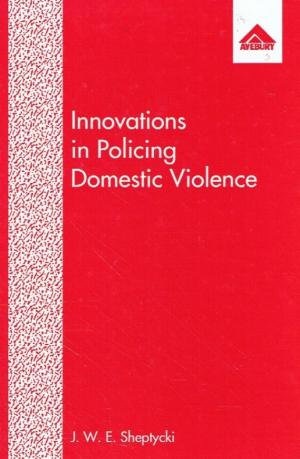
Innovations in Policing Domestic Violence, Aldershot: Avebury, 1993
This is my first book. It is based on my doctoral research, but it represents only a small sliver of that work. My Ph.D. thesis explored the rise of the social movement concerning violence against women that arose during the 2nd wave of feminism from the 1970s onwards. It showed how the concern about men’s violence against women was co-opted during the 1980s by a criminalization discourse that justified the use of police mandatory arrest policies as efficacious in protecting victims of violence in the domestic setting. This book explores the practices of three different specialist domestic violence units in the London Metropolitan Police. It documents my first experiences as an academic police researcher and it has the flaws of a novice.
 The Reluctant Criminologist